
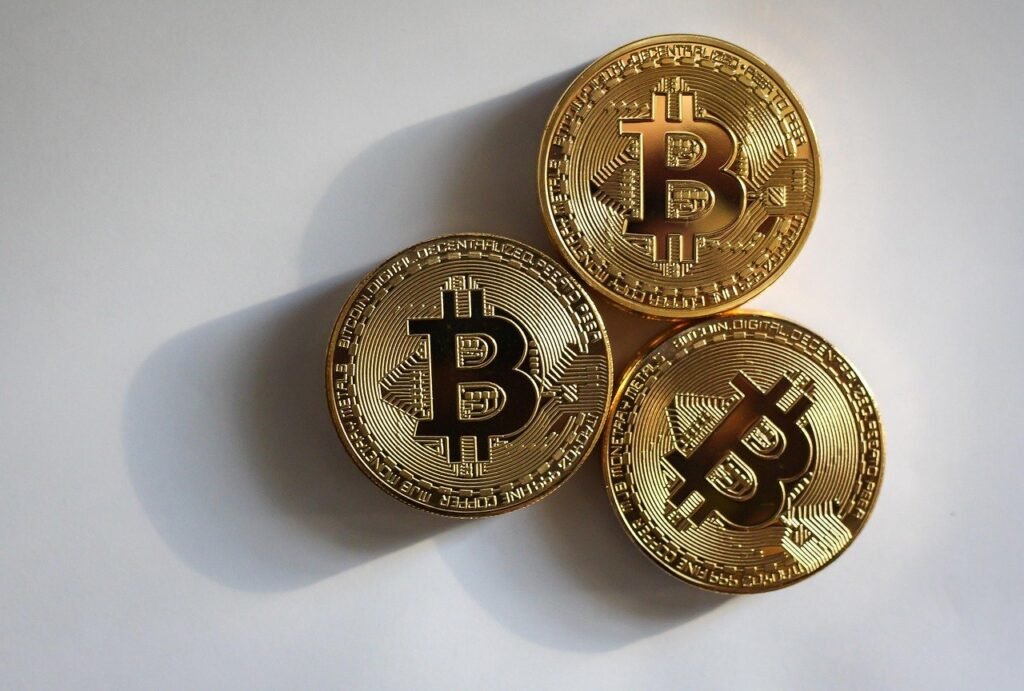
Understanding crypto token standards is crucial for anyone navigating the complex world of digital assets. These standards, like ERC-20, BEP-20, and SPL, are essentially blueprints that dictate how tokens function, interact, and behave on their respective blockchains. Without them, the vast ecosystem of cryptocurrencies and decentralized applications would descend into chaos, making interoperability and innovation impossible. This guide will demystify these foundational protocols, empowering you with the knowledge to make informed decisions in your crypto journey.
From Ethereum’s pioneering ERC-20 to Binance Smart Chain’s efficient BEP-20 and Solana’s lightning-fast SPL, each standard has unique characteristics tailored to its underlying network’s strengths and design philosophy. Grasping these differences is key to understanding transaction costs, speeds, and the overall utility of various digital tokens.
Key Takeaways
- Crypto token standards are essential technical specifications enabling tokens to function predictably and uniformly across their native blockchains.
- ERC-20 is the most widely adopted standard on Ethereum, powering countless DeFi protocols and dApps due to its robust smart contract capabilities.
- BEP-20 tokens operate on BNB Chain, offering lower transaction fees and faster processing times compared to ERC-20, while maintaining EVM compatibility.
- SPL is Solana’s high-performance standard, designed for extremely fast and low-cost transactions, crucial for applications requiring high throughput.
- Understanding these distinct standards is vital for managing digital assets, optimizing transaction costs, and participating effectively in various blockchain ecosystems.
Understanding Crypto Token Standards: The Digital Blueprint
Crypto token standards are fundamental technical specifications that govern how tokens are created, managed, and interact within a specific blockchain network. Think of them as a set of rules or an interface that a token contract must implement to be compatible with the broader ecosystem. These rules ensure that all tokens adhering to a particular standard share common functionalities, allowing wallets, exchanges, and decentralized applications (dApps) to interact with them consistently.

For instance, an exchange wallet knows how to handle an ERC-20 token because it implements standard functions like `transfer`, `balanceOf`, and `approve`. This interoperability is paramount for the health and growth of the crypto ecosystem, enabling seamless asset movement and integration across various platforms. Without these established protocols, every new token would require unique integration, hindering innovation and user experience significantly.
The necessity for these standards arose early in the blockchain space. As more tokens were developed, a universal guideline was needed to ensure compatibility and ease of development. This standardization drastically reduced the complexity for developers and increased the adoption of new digital assets. It has allowed for the explosion of decentralized finance (DeFi) and non-fungible tokens (NFTs) by providing a reliable foundation for all token-based operations.
Diving Deep into ERC-20: Ethereum’s Foundational Standard
ERC-20, or Ethereum Request for Comment 20, stands as the most influential and widely adopted crypto token standard. Proposed in 2015, it set the benchmark for fungible tokens on the Ethereum blockchain, defining a common list of rules that all Ethereum-based tokens must follow. This standardization paved the way for the explosive growth of the Ethereum network, enabling thousands of tokens to coexist and interact seamlessly within its ecosystem.
An ERC-20 token contract typically includes six mandatory functions: totalSupply(), balanceOf(address _owner), transfer(address _to, uint256 _value), transferFrom(address _from, address _to, uint256 _value), approve(address _spender, uint256 _value), and allowance(address _owner, address _spender). These functions allow for checking the total supply, querying an address’s balance, transferring tokens, and managing delegated transfers, respectively. Additionally, two events, Transfer and Approval, must be emitted for transparency and traceability.
The impact of ERC-20 on the decentralized finance (DeFi) landscape cannot be overstated. Projects like Uniswap, Aave, and Compound heavily rely on ERC-20 tokens for lending, borrowing, and trading. Popular examples include stablecoins like Tether (USDT) and USD Coin (USDC), as well as utility tokens like Chainlink (LINK) and Uniswap (UNI). The ubiquity of ERC-20 has fostered an incredibly rich and interconnected network of dApps, all capable of interacting with these standardized digital assets.
Key Characteristics of ERC-20 Tokens
- Fungibility: Each token is identical to another, making them interchangeable.
- Interoperability: Easily integrated into wallets, exchanges, and dApps due to a standardized API.
- Security: Benefits from Ethereum’s robust security model, albeit with higher gas fees.
- Smart Contract Logic: Full programmability via Ethereum’s smart contracts allows for complex token behaviors.
Popular ERC-20 Token Examples
Many of the most recognizable digital assets are ERC-20 tokens. For instance, DAI is a decentralized stablecoin crucial to the DeFi ecosystem, maintaining its peg to the US dollar through complex algorithms. Other prominent examples include Basic Attention Token (BAT), used for digital advertising, and Maker (MKR), the governance token of the MakerDAO protocol. As of 2026, the total market capitalization of ERC-20 tokens continues to represent a significant portion of the entire crypto market, underscoring its enduring relevance. You can learn more about Ethereum’s vast ecosystem at Ethereum.org.
BEP-20: Binance Smart Chain’s Answer to Crypto Token Standards
BEP-20 is the token standard for the BNB Chain (formerly Binance Smart Chain or BSC), designed to be compatible with Ethereum’s ERC-20. This compatibility is a major advantage, allowing developers to easily migrate or deploy their dApps and tokens from Ethereum to BNB Chain with minimal code changes. The primary motivations behind BEP-20’s creation were to offer significantly lower transaction fees and faster processing times compared to Ethereum, addressing some of the scalability challenges faced by the Ethereum network.
Like ERC-20, BEP-20 tokens possess a rich set of functions, including `transfer`, `balanceOf`, and `approve`, ensuring a familiar development and user experience. However, BEP-20 introduces additional functionalities specific to BNB Chain, such as blacklisting, minting, and pausing, which provide more control and flexibility for token issuers. These features can be particularly useful for projects requiring enhanced security measures or the ability to adjust token supply dynamically. Projects like PancakeSwap (CAKE), Venus Protocol (XVS), and the native BNB token itself are prominent examples of BEP-20 assets.
The success of BEP-20 is closely tied to the rapid adoption of BNB Chain, which emerged as a popular alternative during periods of high Ethereum gas fees. Many users flocked to BNB Chain for its cost-effectiveness and speed, leading to a vibrant ecosystem of DeFi applications, NFTs, and gaming projects. Interoperability between BEP-20 and ERC-20 is often facilitated through cross-chain bridges like the Binance Bridge, allowing users to transfer assets between the two networks. Navigating the world of different trading guides often highlights the nuances of these standards.
Advantages of BEP-20 Tokens
- Low Fees: Transaction costs are considerably lower than on Ethereum, making micro-transactions more viable.
- High Speed: Faster block times result in quicker transaction confirmations.
- EVM Compatibility: Easy migration for developers from Ethereum, fostering rapid ecosystem growth.
- Binance Ecosystem: Strong integration with Binance’s centralized services and massive user base.
Navigating BEP-20 with MetaMask
Using BEP-20 tokens often involves configuring popular wallets like MetaMask to connect to the BNB Chain network. This process is straightforward, requiring users to add the BNB Chain network details (RPC URL, Chain ID, Currency Symbol) to their MetaMask settings. Once configured, MetaMask can seamlessly manage both ERC-20 and BEP-20 tokens, providing a unified interface for interacting with multiple blockchain networks. This flexibility has been a key driver in user adoption, simplifying the management of diverse digital assets across different ecosystems.
Visualizing the rapid flow of data and transactions across different blockchain networks.
SPL Tokens: Solana’s High-Performance Crypto Token Standards
SPL, or Solana Program Library, represents the suite of on-chain programs for the Solana blockchain, including the token standard for fungible and non-fungible tokens. Unlike ERC-20 and BEP-20, which are largely EVM (Ethereum Virtual Machine) compatible, SPL tokens operate on Solana’s unique architecture, which prioritizes speed and scalability. Solana’s innovative Proof-of-History (PoH) consensus mechanism, combined with its optimized transaction processing, allows the network to handle tens of thousands of transactions per second (TPS) with extremely low fees.
The SPL token standard defines a standard interface for token contracts, similar to ERC-20, but it’s built using Rust or C++ and leverages Solana’s account model. In Solana, all data, including token balances, is stored in accounts, and programs (smart contracts) interact with these accounts. This design allows for parallel transaction processing, which is a cornerstone of Solana’s high throughput. Popular SPL tokens include the native Solana (SOL) token, wrapped stablecoins like USDC-SPL, and various tokens from DeFi protocols such as Raydium (RAY) and Serum (SRM).
SPL tokens are particularly well-suited for applications that demand high performance, such as high-frequency trading, real-time gaming, and large-scale decentralized social networks. The low transaction costs on Solana make it economically viable for users to perform frequent micro-transactions, opening up new possibilities for Web3 development. As of 2026, the Solana ecosystem continues to attract significant developer talent, pushing the boundaries of what is possible in the blockchain space with its efficient token standards.
The Solana Advantage for Token Issuance
Issuing SPL tokens on Solana offers several distinct advantages. Developers benefit from a robust set of tools and a highly performant network, enabling them to build scalable applications without worrying about prohibitive gas fees or network congestion. The developer experience is streamlined through the Solana Program Library, which provides pre-built programs for common operations like token minting, transfers, and burning, significantly accelerating development cycles. This focus on developer efficiency and user experience positions SPL tokens at the forefront of the next generation of blockchain innovation.
SPL Token Use Cases
SPL tokens power a diverse range of applications on Solana. In DeFi, they facilitate lightning-fast swaps and liquidity provision on decentralized exchanges. For gaming, SPL tokens can represent in-game assets that are easily transferable and tradable. They are also used for governance in many Solana-based protocols, allowing token holders to vote on key proposals. The versatility and efficiency of SPL make it a compelling choice for projects aiming for mass adoption and seamless user interaction.
A visual breakdown of key differences and similarities between major crypto token standards.
Comparing Crypto Token Standards: ERC-20 vs. BEP-20 vs. SPL
While ERC-20, BEP-20, and SPL all serve the purpose of defining token behavior, they do so on different blockchain networks, each with its own design philosophy, strengths, and trade-offs. Understanding these distinctions is crucial for developers choosing a platform for their digital assets and for users deciding which network best suits their transaction needs.
The most significant differences lie in their underlying blockchain architecture, consensus mechanisms, and scalability solutions. Ethereum, with its ERC-20 standard, pioneered smart contract functionality but often faces challenges with high gas fees and network congestion. BNB Chain, utilizing BEP-20, offers an EVM-compatible alternative with lower costs and faster transactions, albeit with a more centralized consensus model. Solana, with its SPL tokens, takes a fundamentally different approach, achieving unparalleled speed and low costs through a unique architecture designed for massive throughput.
When evaluating these crypto token standards, consider factors such as transaction speed, network fees, security, decentralization, and the size and maturity of their respective ecosystems. A project prioritizing absolute decentralization and a vast developer community might lean towards Ethereum and ERC-20. Conversely, a project focused on gaming or high-frequency dApps demanding near-instant transactions and minimal costs would likely find Solana’s SPL more appealing. For many, BNB Chain and BEP-20 strike a balance between EVM compatibility, lower fees, and respectable speeds.
| Feature | ERC-20 (Ethereum) | BEP-20 (BNB Chain) | SPL (Solana) |
|---|---|---|---|
| Blockchain | Ethereum | BNB Chain | Solana |
| Consensus | Proof-of-Stake (PoS) | Proof of Staked Authority (PoSA) | Proof-of-History (PoH) + PoS + Tower BFT |
| Transaction Speed | Slower (approx. 15-30 TPS) | Faster (approx. 100-300 TPS) | Very Fast (approx. 65,000+ TPS) |
| Transaction Fees | Generally Higher | Moderate | Extremely Low |
| Smart Contract Language | Solidity | Solidity | Rust, C++ |
| Key Use Cases | DeFi, NFTs, General DApps | DeFi, Gaming, DApps, NFT Marketplaces | High-Frequency Trading, Web3 Gaming, Real-time Applications |
| Example Tokens | UNI, LINK, AAVE | CAKE, BNB, BUSD | SOL, USDC-SPL, RAY |